

UMD: Location, strong programs, a deadline that matters
By Karen Hott, July 2026
Fast facts for
University of Maryland, College Park
Located in:
College Park, MD
Number of students:
31,000 undergraduate
Acceptance rate:
45% of applicants
Type:
Public
Test Policy:
Test Optional
This blog post is about a specific college or university, so we've included some key details right up top. These facts were last updated July 7, 2026.
Rosemary Martín Edwards, associate director of undergraduate admission at the University of Maryland, College Park, presented current information about UMD to the DC MIX group of HECA and IECA members on June 24, 2026. As usual, she delivered a wealth of information.
By the numbers
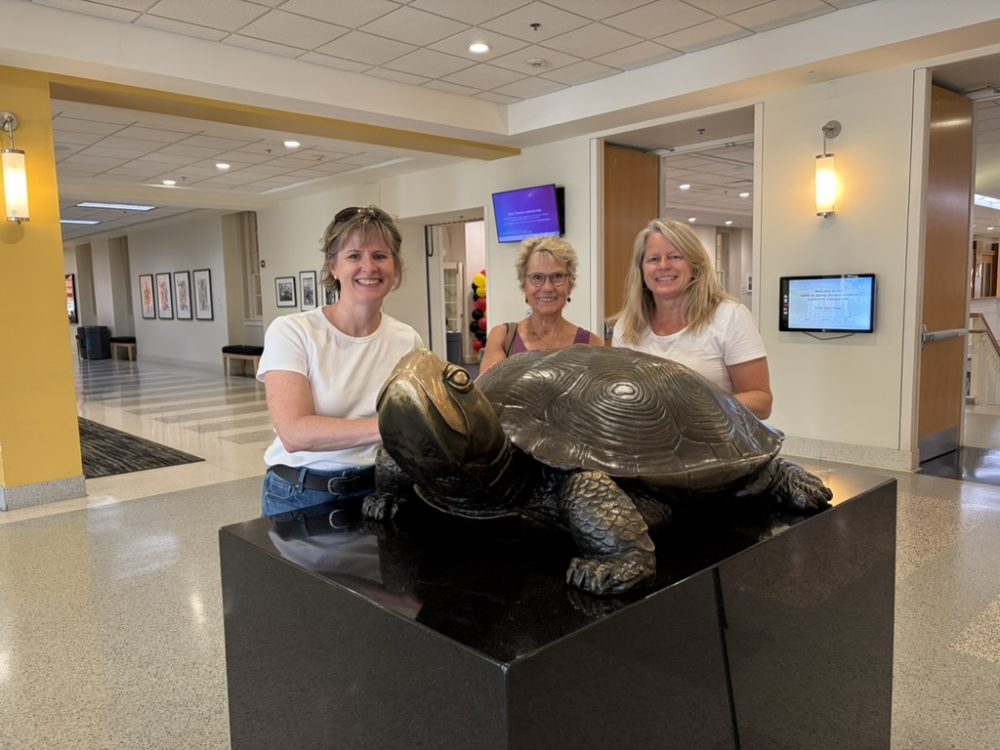
This year, Maryland at College Park had 69,000 applications for a freshman class of about 5,500. The admit rate remains at 45 percent. As a state land-grant institution, UMD aims to enroll 70 to 75 percent in-state students. UMD is a true melting pot: persons of color make up 42 percent of the class, and international students hail from 130 countries. The Terrapins, or Terps, compete in the Big Ten. Fear the Turtle!
Who belongs at UMD?
According to Edwards, students who are motivated and socially active—and who think seriously about global impacts—will be happy and successful at College Park. UMD tends to draw students who want a large-scale environment where they can plug into something bigger: research, policy, or industry, given the university’s proximity to the federal government and the tech, health, and space sectors that surround it.
While UMD remains test optional, the average weighted GPA of admitted students is 4.5—a sign that most successful applicants have taken rigorous coursework and performed at a high level throughout high school.
Beyond academics, Edwards emphasized that Maryland wants students who will actively contribute to campus and community life, not simply attend. With over 800 clubs and organizations, a wellness-focused recreation center, and a genuinely diverse student body, the school benefits students who show up ready to engage rather than observe from the sidelines.
Location as a differentiator
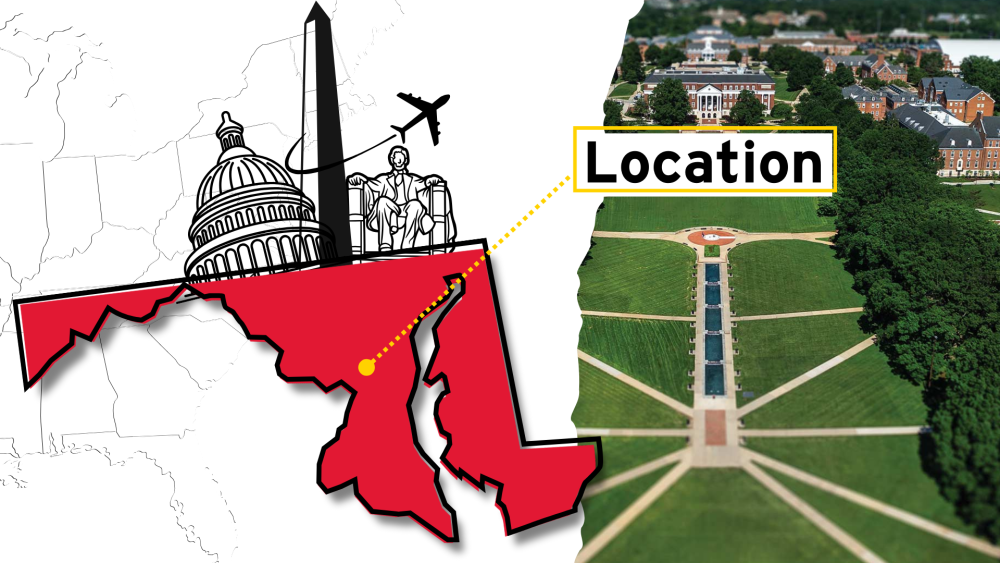
What makes UMD different from any other large Big Ten flagship? It’s the only university with access to the seat of our federal government, which means it also has access to the tech, health, and space sectors. It’s easy to get to, with three airports in close proximity (BWI, IAD, and DCA) and Amtrak running along the D.C.–New York–Boston corridor.
The Metro Purple Line, right in the middle of campus, will start taking riders in late 2027; you can already see the tracks and overhead light-rail lines in place. Right now, the existing College Park–UMD station can be reached by shuttle or on foot, making Washington, D.C., a quick ride away.
Campus life
Maryland just opened a new building for Hillel that includes a kosher dining hall. About 11 percent of UMD Terrapins are Jewish. The Eppley Recreation Center offers every amenity you could wish for—swimming pools, a bouldering zone (where participants climb short walls without ropes)—plus free wellness classes. There are 800+ clubs and organizations for Terps to enjoy.
Facilities spotlight
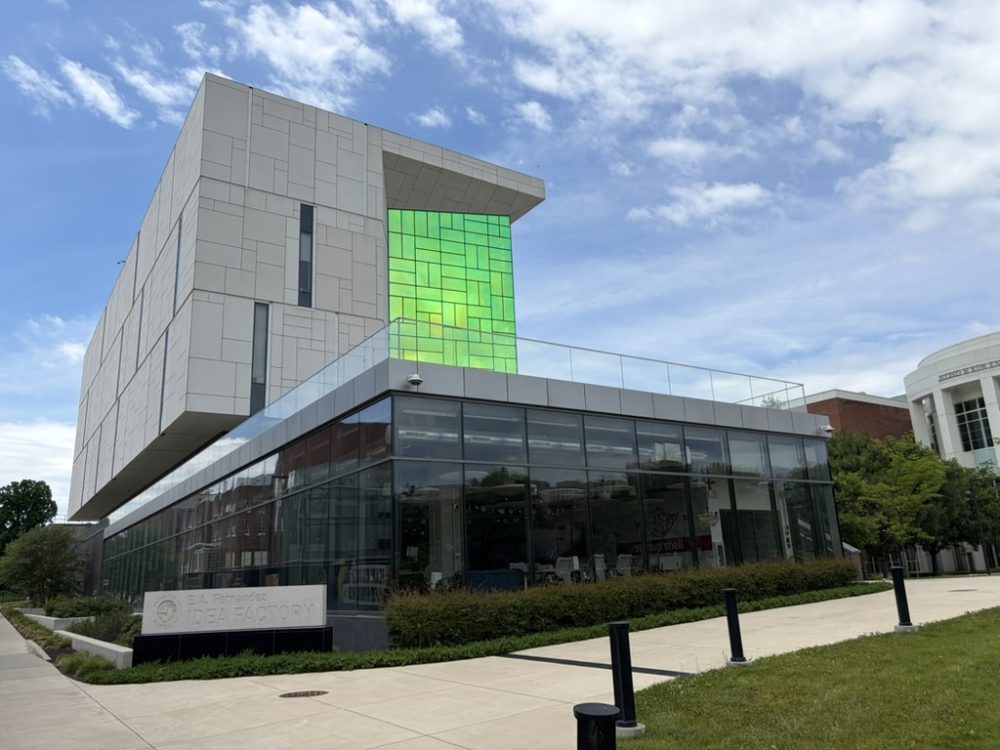
The old Martin Hall for chemical engineering has been replaced by the Stanley R. Zupnik Hall, an interdisciplinary engineering facility built to encourage collaboration and innovation. It sits near the colorful IDEA Factory, opened in 2022, which houses “cutting-edge research and education in engineering, science, arts, and business” (https://eng.umd.edu/facilities/idea-factory).
Career services
Career Services at Maryland will serve Terps while they’re on campus and far into the future—it’s a resource you’ll have forever. Each school or college has its own career services team to help students locate internships and prepare for work.
Experiential learning and high-impact programs
Experiential learning is built into most majors, with undergraduate research, internships, education abroad, and service learning opportunities.
The Do Good Institute, in collaboration with the School of Public Policy, gives students the chance to pitch a solution to a thorny problem. Winners receive funding to pursue their solution.
The admissions process
The University of Maryland reads applications holistically and spells out exactly what that means—in alphabetical order—on its website (https://admissions.umd.edu/apply/admission-review-process-factors). Broadly, they look at “educational performance, potential for college success, potential to promote beneficial educational outcomes and contribute to campus and community life, and students’ persistence and commitment to educational success.”
Maryland reviews applications major-blind unless you’re applying to a Limited Enrollment Program (LEP), in which case they look to see whether your profile fits the major you’ve chosen.
Limited Enrollment Programs (LEPs)
LEPs are limited in space and may change from year to year depending on demand—Journalism, for example, used to be an LEP but no longer is. Check lep.umd.edu for the most current list. For 2026, the 10 LEPs are Biochemistry, Biological Sciences, Business, Chemistry, Computer Science, Criminology & Criminal Justice, Engineering, Immersive Media Design, Psychology, and Neuroscience. LEPs are more selective than general admission to UMD, usually accepting fewer than a third of those who apply. If you’re accepted to an LEP, you’ll need to earn a minimum GPA in a series of Gateway courses to remain in the major.
When you apply to UMD, you’re asked to select a first and second major. Don’t list two LEPs, Edwards advised. If you want to major in an LEP, list it first and choose a second major that genuinely interests you. For example, if Business is your first choice, list something closely related in Arts & Humanities—like Economics—as your second. If you don’t qualify for the LEP but do meet the university’s general admissions standards and haven’t listed a second major, you may be admitted to Letters & Sciences, an advising construct designed to help students reach their goals.
Early Action: the essential deadline
If you retain nothing else about UMD College Park, remember this: 90 to 95 percent of the freshman class is admitted through Early Action. That deadline is November 1, and there is no extension—every piece of your application must be submitted by 11:59 p.m. on November 1. That means official transcripts, test scores (if you’re submitting them), a teacher recommendation and your counselor recommendation, the completed Common App with essay, and the application fee.
Make sure you answer the supplemental short-answer questions—Edwards said that’s her favorite part of reading applications, and the prompts will remain the same this year. Also give careful thought to the diversity essay. Even if you don’t consider yourself “diverse,” think broadly: your family situation, your religion, or perhaps a learning difference all qualify. It’s OK if you haven’t been exposed to much diversity; UMD is looking for students who seek exposure to diverse mindsets.
If you’re not admitted: spring, waitlist, and transfer
Students admitted to Maryland may be offered fall or spring admission. Those admitted for spring are offered Freshman Connection, a program that allows them to arrive in the fall, live on campus, and participate fully as a Terp—with one exception: they may only register for classes that meet at 3 p.m. or later. Most students offered Freshman Connection accept it; this year 95 percent agreed to the terms.
For the class of 2030, 300 students were taken off the waitlist, but about 58,000 were denied admission entirely. Successful appeals are rare. Edwards recommends appealing only if a piece of your application was missing—a counselor recommendation, for example.
Maryland’s transfer pathway is robust, and you’re welcome to reapply to College Park the following year if you weren’t admitted. The Maryland Transfer Advantage Programs are available through the state’s community colleges; transfer counselors at those schools will map out exactly which courses you need, usually totaling 60 credits, or two years. Maryland welcomes many transfers each year.
Rankings, graduate opportunities, and bottom line
My fellow Marylanders have known for a long time that the University of Maryland, College Park, delivers a superior education in a location rich with opportunity. It has climbed the rankings steadily in recent years—in 2025 it was ranked #16 among around 800 public universities nationwide by U.S. News & World Report.
The strength of the institution extends well beyond the undergraduate experience. Graduate students can see their tuition fully covered and earn a generous stipend while working an assistantship—a signal of how seriously UMD invests in the scholarly community at every level.
I’ve had many in-state students who got into more selective schools but chose Maryland for its excellent academics, rich culture, and unbeatable price tag. It’s truly a Maryland gem.
Embrace the Turtle!
~~~~~~~~~~~~~~~~~~~~~~~~~~~~~~~~~~~~~~~~~~~~~~~~~~~~~~~~~~~~~~~~~~~~~~~~~~~~~~~~~~~~~~~~~~~~~~
If you’d like help with the transition from high school to college, I make the journey a little more sane. You can message me on the website or directly at khott@twobridgescc.com, or text me at 410.353.5617.