

Towson pairs access with success
By Karen Hott, June 2026
Fast facts for
Towson University
Located in:
Towson, MD
Number of students:
16,500 undergraduate
Acceptance rate:
75% of applicants
Type:
Public
Test Policy:
Test Optional
Test Policy Details:
indefinitely
This blog post is about a specific college or university, so we've included some key details right up top. These facts were last updated June 17, 2026.
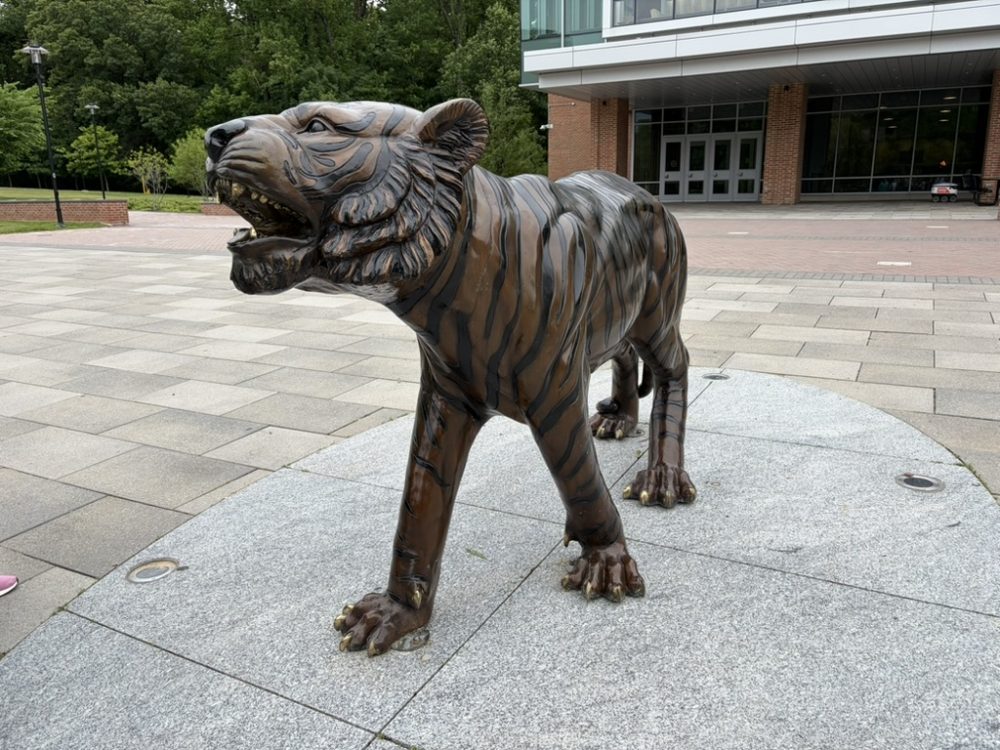
In suburban Baltimore, you can hear the Tigers roar.
First impressions: a campus in bloom
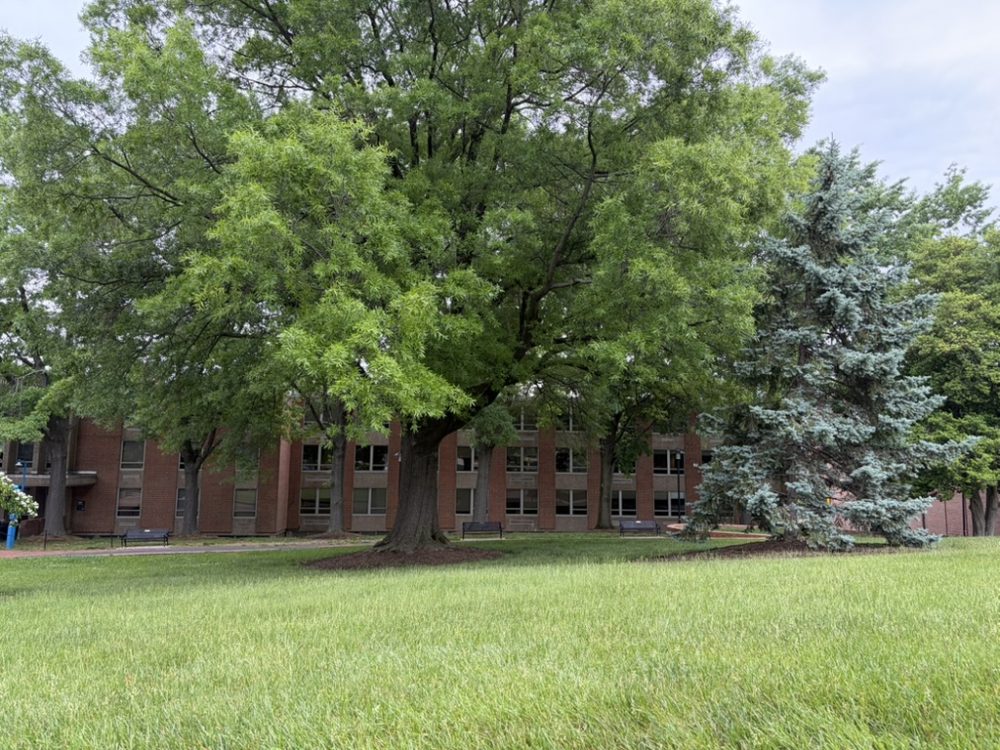
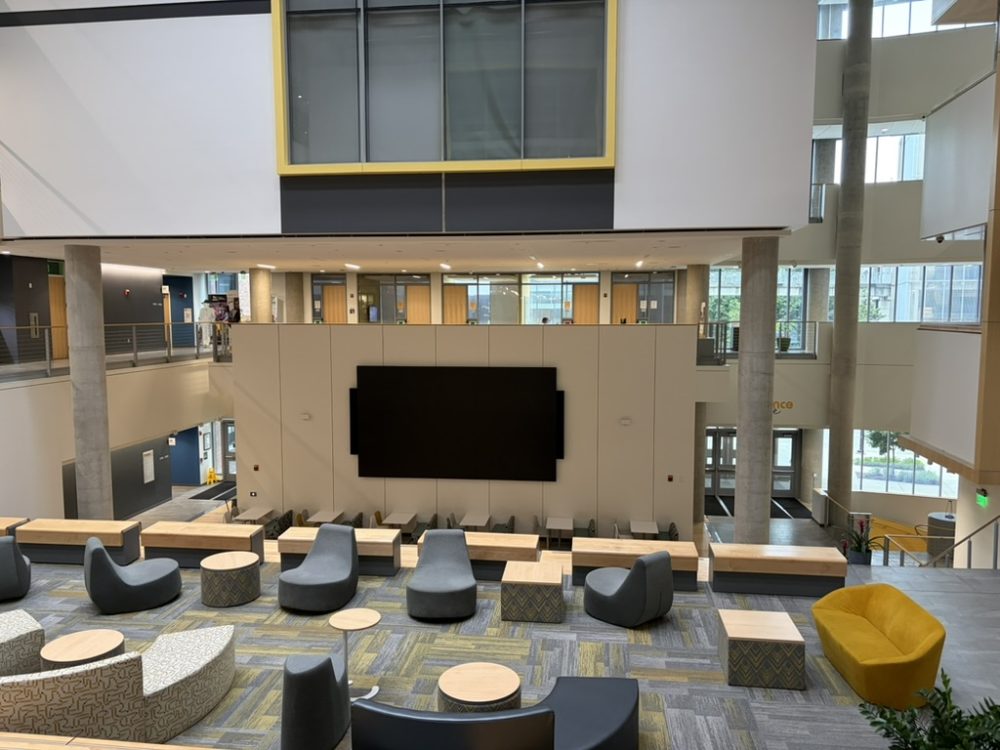
When I visited Towson after the IECA conference in May, I was struck by all the greenery. In fact, there’s an arboretum in the middle of the campus. Buildings look well maintained and some are quite new, like the new Health Professions Building, which houses nursing and allied health. The top floor is a simulation hospital that can be converted to an emergency room or rural clinic. Towson is spending $1.7 billion on continued campus improvements, including renovating Smith Hall to unite the mass communication, communication studies, and electronic media and film departments.
Tigers roar
The Towson Tigers play NCAA Division I and the lacrosse team consistently places in the top 20 of their conference. Football, basketball, and gymnastics draw spirited fans.
The social mobility story
The Wall Street Journal rated Towson University #1 in Maryland based primarily on their impressive social mobility score, which measures how well a school improves students’ economic trajectory. They admit 82 percent of applicants yet still have above-average graduation rates: 70 percent graduate in six years from TU and 50 percent in four years, while the national six-year average is 50 percent. It has a respectable retention rate of 83 percent from freshman to sophomore year. Average class size is 24, and freshman courses are capped at 30.
What admissions really looks at
Admission is major blind and test optional, except the B.F.A. program requires a portfolio for Visual Arts and an audition for Dance. Only 19 percent submitted test scores, and that’s the last thing they look at. What matters to admissions is your grades and transcript in the context of your high school, and they will consider the trend of your performance. Nursing students are admitted into pre-nursing and must complete an application for the program after securing their prerequisites. The NCLEX pass rate is 96 percent.
From classroom to career
Engineering students may begin at Towson as physics majors and enter the pipeline to the Limited Enrollment Program in Engineering at the flagship University of Maryland, College Park. Ninety percent of all students complete an internship; everyone in business, education, and nursing has an internship experience. Pre-med support is strong, and Towson Tigers can take advantage of Baltimore’s large health industry. Towson’s Electronic Media and Film program is the largest in Maryland and highly regarded, with strong industry connections and extensive production facilities.
What you can study
Top majors at Towson for the class of 2030 are Nursing, Business, Biology, Psychology, Computer Science, Exercise Science, Forensic Chemistry, Criminal Justice, and Public Health. In addition to these most popular majors, Towson offers some interesting ones, like Deaf Studies, Gerontology, Health Care Management, and Molecular Biology, Biochemistry & Bioinformatics.
Towson’s programs fall under six colleges or schools: Business & Economics; Education; Fine Arts & Communication; Fischer College of Science & Mathematics; Health Professions; Liberal Arts. Towson produces more teachers than any other school in Maryland, and it provides a path to an accelerated Master of Arts in Teaching.
Affordability and community
Towson offers out-of-state scholarships of $12K to $14K a year for students from noncontiguous states. Students from contiguous states of Virginia, D.C., Pennsylvania, and Delaware may also receive out-of-state grants but these are more competitive. Approximately 88 percent of Towson Tigers are from Maryland, and the school is a majority-minority school, 26 percent White, 44 percent Black, 16 percent Hispanic, 6 percent two or more races, 6 percent Asian.
A teaching-first culture
Towson hires faculty who put teaching undergraduates first. Its emphasis on undergraduates and undergraduate teaching seems more like a small liberal arts college than a large state institution with 16,500 undergraduates and 3,000 graduates. The commitment to first-generation and low-income students shows up in its high four- and six-year graduation rate and in its multiple programs geared toward helping students succeed at Towson. The new Tigers Success Program provides dedicated advisers, academic coaching, and a 1-credit college skills course for students who need help transitioning to college. Every student can take advantage of end-of-semester Destress for Success, a full-day wellness event.
The bottom line
This school does a lot right to lay the groundwork for a successful college experience. In a recent survey, 80 percent of students reported having a mentor, and 87 percent reported having an experiential learning opportunity such as an internship or faculty-mentored research. For students who want DI athletics, genuine mentorship, strong professional preparation (especially in health, education, communication, and film), and a campus culture that prioritizes belonging, Towson is often an underrated fit.