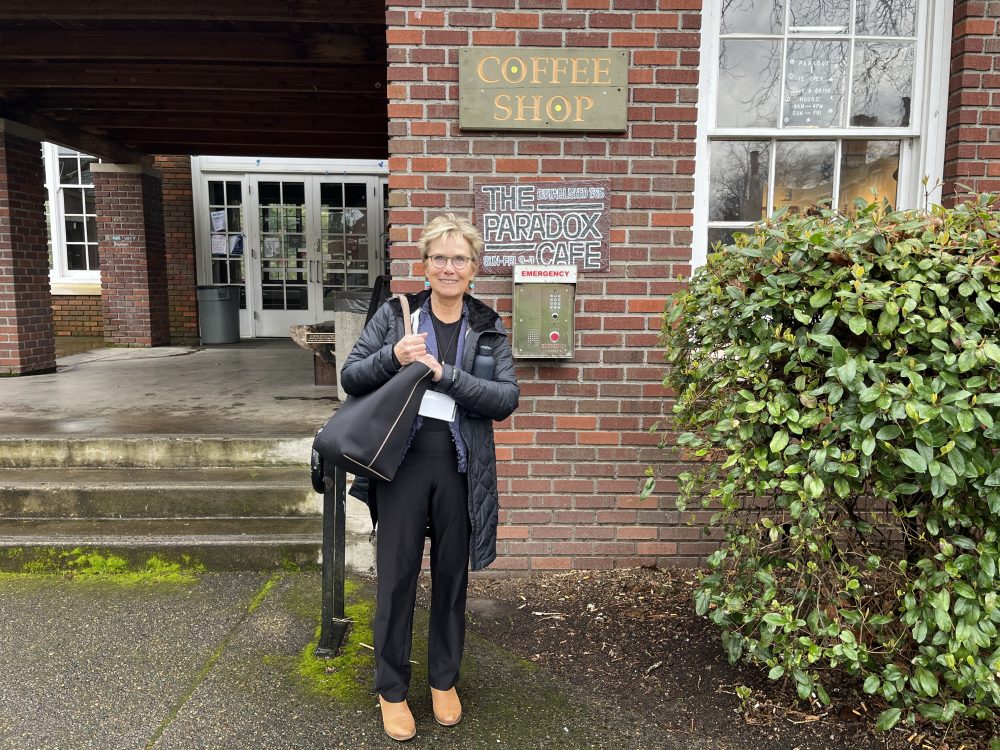

Reed College turns students into scholars
By Karen Hott, March 2026
Fast facts for
Reed College
Located in:
Portland, OR
Number of students:
1,400 undergraduate
Acceptance rate:
25% of applicants
Type:
Private, no religious affiliation
Test Policy:
Test Blind
Test Policy Details:
SAT/ACT not considered
This blog post is about a specific college or university, so we've included some key details right up top. These facts were last updated March 6, 2026.
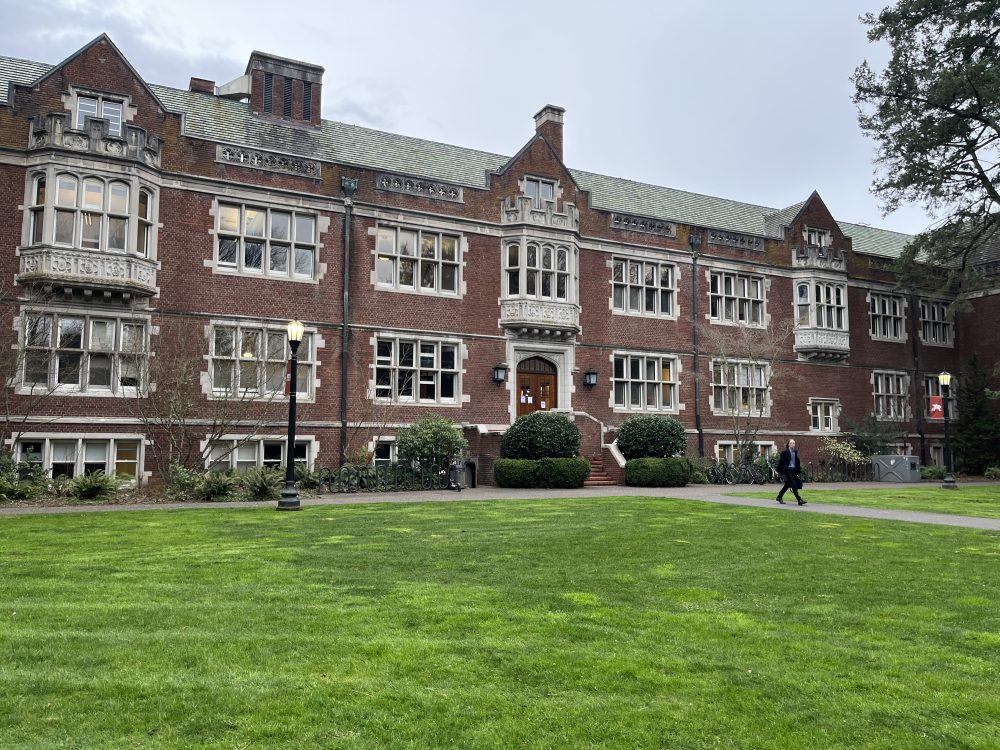
As we turned into the broad green lawn of Reed College in Portland, red brick buildings with limestone accents around doors and windows in Tudor Gothic style greeted us. I visited Reed during the rainy season, in early March on a counselor tour of five Pacific Northwest liberal arts colleges.
A city with character
Portland, Oregon, is known for its progressive ethos and its abundance of food trucks. It sits in the shadow of snow-capped Mount Hood and wears the gray and green of its oceanic climate. The Cascade mountains capture the moisture from the Pacific Ocean and reflect it as clouds and drizzle, so the grass is very green and the abundant Douglas fir and red cedar trees grow tall and thick. Walking the campus, you’ll see Portland’s influence in full effect—self-expression is the norm, and the community is visibly, proudly diverse in identity and lifestyle.
Professors as partners
On the Reed campus, students and professors address each other by first name without the honorific of Dr. or Professor. It implies that professors learn and explore with their students rather than deliver knowledge to them. With only one graduate offering, a master of arts in liberal studies, faculty focus intently on undergraduate students. Passionate professors make learning hands on.
One requirement, one big question
Reed’s core curriculum has one requirement: Humanities 110, a yearlong interdisciplinary course referred to as Hum (pronounced hume). In the first semester, you study ancient Greek and Roman civilization. The spring 2026 semester covers Mexico and Harlem in a nod to more modern times. Covering arts, literature, philosophy, religion, politics, and history, Hum 110 asks students to engage in fundamental questions.
As part of your application to Reed, you’re asked to address this prompt:
For one week at the end of January, Reed students upend the traditional classroom hierarchy and teach classes about any topic they love, academic or otherwise. This week is known as Paideia after the Greek term signifying “education”—the complete education of mind, body and spirit. What would you teach that would contribute to the Reed community?
If you like the prompt, you might like Reed. It’s a community of scholars who love to learn and share knowledge. Reedies are passionate about niche interests.
The Honor Principle
The Honor Principle guides interaction at Reed College. It’s not codified or defined, but the most common interpretation is “any action that causes unnecessary pain or discomfort to any member of the Reed community, group within the community, or to the community as a whole, is a violation of the Honor Principle.” True to that spirit, the Reedies who addressed the counselors on tour eschew using AI. You can leave your belongings sitting out and they’ll be there. In shared spaces, you clean up after yourself.

Community from the inside
Reed treated the counselors to two panels, one with students and one with faculty. We asked the students what surprised them about Reed, and one said that he had expected to encounter a bunch of introverts like himself, but he found many outgoing friends. They said that there was lots of support from peers (“the community picks you up when it’s raining,” said one) as well as formal help like six individual therapy sessions per semester. You can always stop into the departmental lounges. If you’re worried about a friend, you can put a referral into the Care Team, made up of staff from different departments.
The faculty panel comprised two 30-year veteran teachers and one new chemistry teacher. The Spanish professor loved watching students grow in confidence and self-awareness; the linguist saw them building real lab skills as they transition from student to linguist, collating an online database of what they all discovered together about a new language.
The veterans said that they’ve stayed at Reed because they get to know students individually, having conversations about academics and non-academics as well. They appreciate the interactions among students and faculty, the non-hierarchical nature of the college, and the way they discuss with faculty how you construct truth in your discipline. The new chemistry teacher said she was surprised by how much time the professors spend getting to know students and advising on thesis development.
Every student writes a thesis
Every student writes a thesis before graduation. Our tour guide, a linguistics major, was writing his thesis on a drag queen’s language shift as he transforms from male to female. Reedies consider it a bookend to Hum 110. Just as Hum 110 marks the beginning of your journey, the thesis marks the end, though they of course acknowledge that your journey will continue beyond Reed.
The career center is named the Center for Life Beyond Reed, an acknowledgment that not everyone will hop into a job when they graduate, though career services are available.
Beyond grades, beyond a degree
Reed College is grade silent. By that I mean that it’s just not cool to talk about your grades. Professors assign grades, even keeping a grade book, but all feedback comes in narrative form. You’re expected to keep improving with the feedback you’re given. I imagine that this is both liberating and frustrating; after all, Reed only accepts one of every four applicants, so these applicants have spent their high school (and probably earlier) years with grades defining them.
Cost and financial aid
Cost of attendance runs around $92,000, but Reed is committed to filling 100 percent of demonstrated financial need. Starting in Fall 2026, the “Reed Promise” guarantees free tuition for admitted students from families earning under $100,000 with typical assets. In spite of the lofty price tag, the return on investment is high, and The Princeton Review rates it a “best-value” school.
Is Reed right for your student?
Who would thrive at Reed? Lovers of learning for learning’s sake. Students with niche interests. Those who want deep relationships with their professors. Who would not thrive? Students looking for DI rah-rah. Anyone put off by alternative lifestyles. Those who just want to check the boxes on the way to a degree.
If I had another life to live, I’d want to be a 30-year veteran English professor at Reed College, treasuring discussions with my colleagues and students, moving together toward discovering truth, and teaching a mini-course in osprey and eagle calls for Paideia.